 By Chuck Jelly ·
 By Chuck Jelly ·
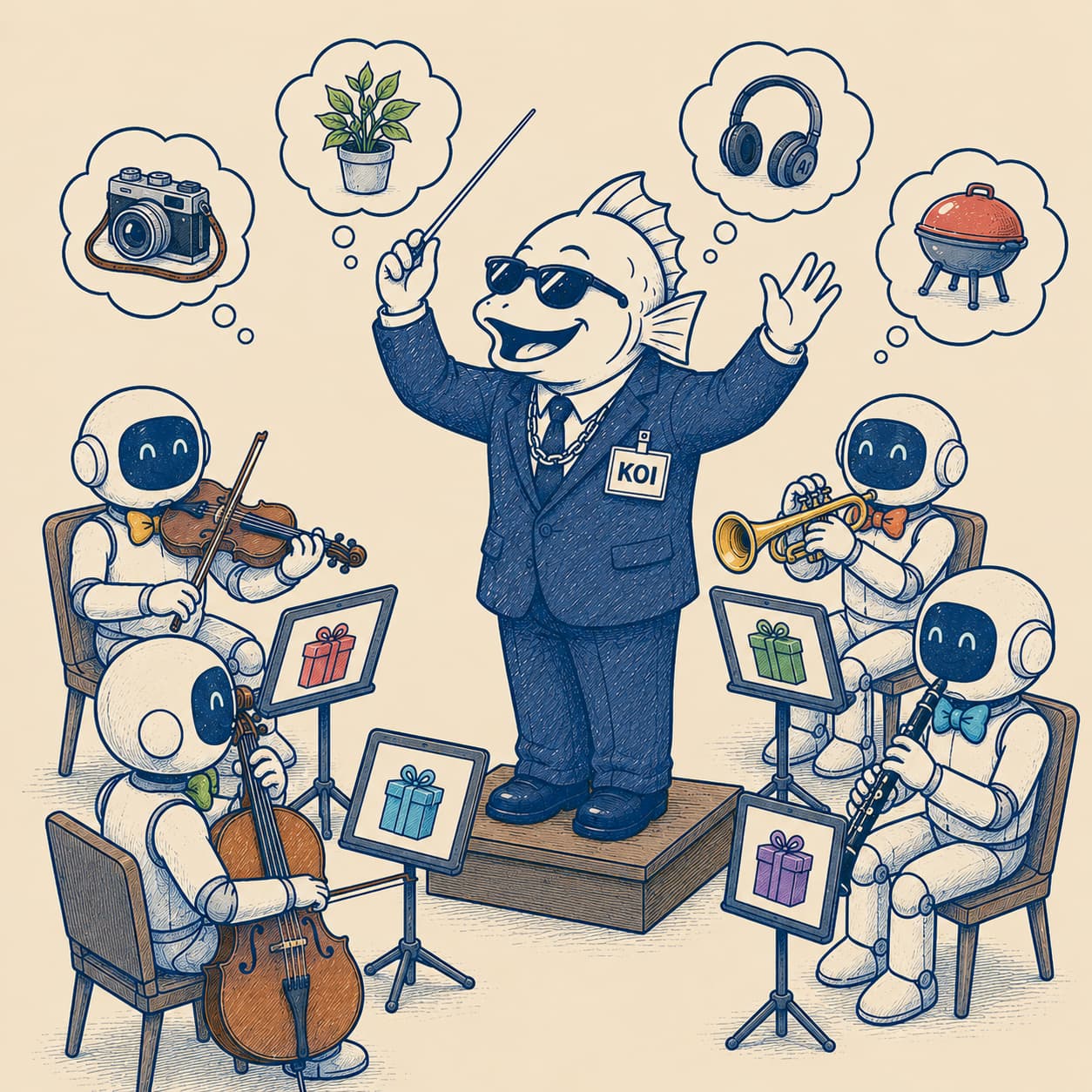
Struggling with gift ideas? Learn the four-part formula for prompting ChatGPT, copy ten ready-to-use gift prompts, and keep the best ideas in a shareable list.
Most gift brainstorming goes the same way. You open ChatGPT, type "gift ideas for my brother," and get ten suggestions that could apply to anyone: a nice candle, a Bluetooth speaker, a gift card. The tool isn't the problem. The prompt is.
ChatGPT is good at brainstorming when you give it real context. Tell it who someone is, what they care about, and what you want the gift to say, and it will hand you concrete, specific suggestions. Where it falls short is everything after the brainstorm. Ideas sitting in a chat are easy to lose, hard to share, and impossible to coordinate with the rest of your family.
This guide covers how to write a better gift prompt, ten prompts you can copy and adapt, and how to keep the results from disappearing.
The quality of what ChatGPT gives you depends on the quality of what you give it. A strong gift prompt covers four things:
A prompt that uses all four looks like this:
"I need gift ideas for my 34-year-old brother. He's into gravel cycling, specialty coffee, and minimalist design. He just moved into a new apartment. It's for his birthday, and I want to spend around €80 to €120. Give me 8 ideas split into: (1) practical, (2) experiential, (3) something he wouldn't buy himself. Explain why each fits him."
That is specific enough to get ideas that land, instead of a generic list.
Open a new chat and write down everything you know about them:
You are building a profile, not a novel. Bullet points are plenty.
Once ChatGPT has context, ask for the output in a structured way:
"Based on what I told you, give me 10 gift ideas for [person] across three categories: (1) safe but thoughtful, (2) personal and creative, (3) experiential (not a physical object). Include approximate prices and a one-line reason why each would land well."
This forces variety and stops you from getting ten versions of the same kitchen gadget.
The first list is a starting point, not a final answer. Use follow-ups to narrow it down:
The second or third round is usually where the best ideas show up.
Pick your favorites and move them out of the chat, with a link, a price, and a note on why each one fits. A notes app works. So does a shared wishlist. If you use Bestboy, you can connect ChatGPT to your account so it saves ideas to a list directly. Here's how to connect an AI assistant.
Whatever you choose, the point is the same: an idea you can't find in December is not an idea.
Copy, paste, and fill in the brackets.
"Give me 10 thoughtful gift ideas for [person] who likes [interests]. The occasion is [occasion], my budget is about [budget], and I'd like the gift to feel [useful, personal, fun, sentimental]. Explain why each might suit them."
"I'm buying for someone who says they don't need anything. They enjoy [interests], value [values], and prefer [style]. Suggest 8 gifts that are not generic, across different price points, and explain why each would feel meaningful."
"Suggest 6 experience-based gifts for [person] who loves [interests]. Include local options, online options, and things we could do together. Budget range: [budget]. Explain why each fits their personality."
"I'm buying for a minimalist who dislikes clutter. They care about [interests] and prefer [quality over quantity / experiences over objects]. Give me 7 gift ideas that are useful, consumable, or experiential, and explain why each would work."
"I'm planning gifts for my whole family: [list each person with age, interests, and budget]. For each person, suggest 5 gift ideas ranked by how thoughtful and personal they are. Include where to buy and approximate prices."
"I need a gift for [person] by [date]. They like [interests], and my budget is [budget]. Suggest 5 options that can be delivered or picked up locally in time, and explain the pros and cons of each."
"We are organizing a group gift for [person] with a total budget of [budget]. Suggest 5 meaningful group gift ideas, explain how to split the cost, and describe how to present it so it feels personal."
"This person already owns most things they need. They enjoy [interests] and value [values]. Suggest 6 gifts that are upgrades, consumables, or experiences, and explain why each would feel special."
"Suggest 8 gift ideas for someone with a [minimalist / vintage / tech / outdoor / design] style who likes [interests]. Include a mix of objects and experiences, and explain how each matches their aesthetic."
"I'm deciding between [gift A] and [gift B] for [person]. Ask me 3 to 5 questions to help me choose, then recommend one and explain why it fits them better."
Being too vague. "I need gift ideas for my dad" gets generic results. "I need gift ideas for my 62-year-old dad who loves history, cooking, and walking, under €100" gets useful ones.
Ignoring the budget. ChatGPT can work within a range, but only if it knows the range. Put a price next to every idea you keep, so the full picture stays visible.
Forgetting to iterate. The first list is a draft, not a decision. Two or three rounds of follow-ups almost always beat the first answer.
Not organizing the output. Ideas in a chat are easy to lose. Move your shortlist somewhere you can see what has been chosen and what is still open.
Skipping coordination. Even great ideas turn into duplicates when two people independently buy the same thing. Share the shortlist with the people involved, and agree who is buying what.
ChatGPT doesn't replace your judgment about what someone will love. It replaces the blank page. Give it good context, iterate a couple of times, and keep the shortlist somewhere you can find it, and gift-giving gets a lot less stressful.
Yes, but only with enough context: vague prompts get vague, generic suggestions. Giving ChatGPT the recipient's age, interests, the occasion, and a budget consistently produces far more useful, specific results than a one-line ask.
The strongest prompts include four things: who the recipient is, their interests and style, the occasion, and a budget range. Asking for ideas split into categories (practical, experiential, something they wouldn't buy themselves) also produces more varied results than a flat list.
Chat history isn't built for tracking or sharing decisions over time, so ideas tend to get lost or forgotten. Moving a shortlist into a structured wishlist, with prices, links, and notes, keeps everything visible and shareable long after the chat closes.
Yes: listing each person with their age, interests, and budget in one prompt lets ChatGPT suggest ideas for everyone in a single pass. Organizing the results into separate wishlists per person afterward keeps the ideas from blurring together.
They're suited to different jobs: search finds specific items, while an AI assistant fills in the harder gap: turning vague context ("he's into cycling and just moved") into a tailored shortlist. Most people get the best results using both, brainstorming with AI first and then searching for the exact version of an idea worth buying.
Get a free Bestboy account and connect it to ChatGPT