 By Chuck Jelly ·
 By Chuck Jelly ·
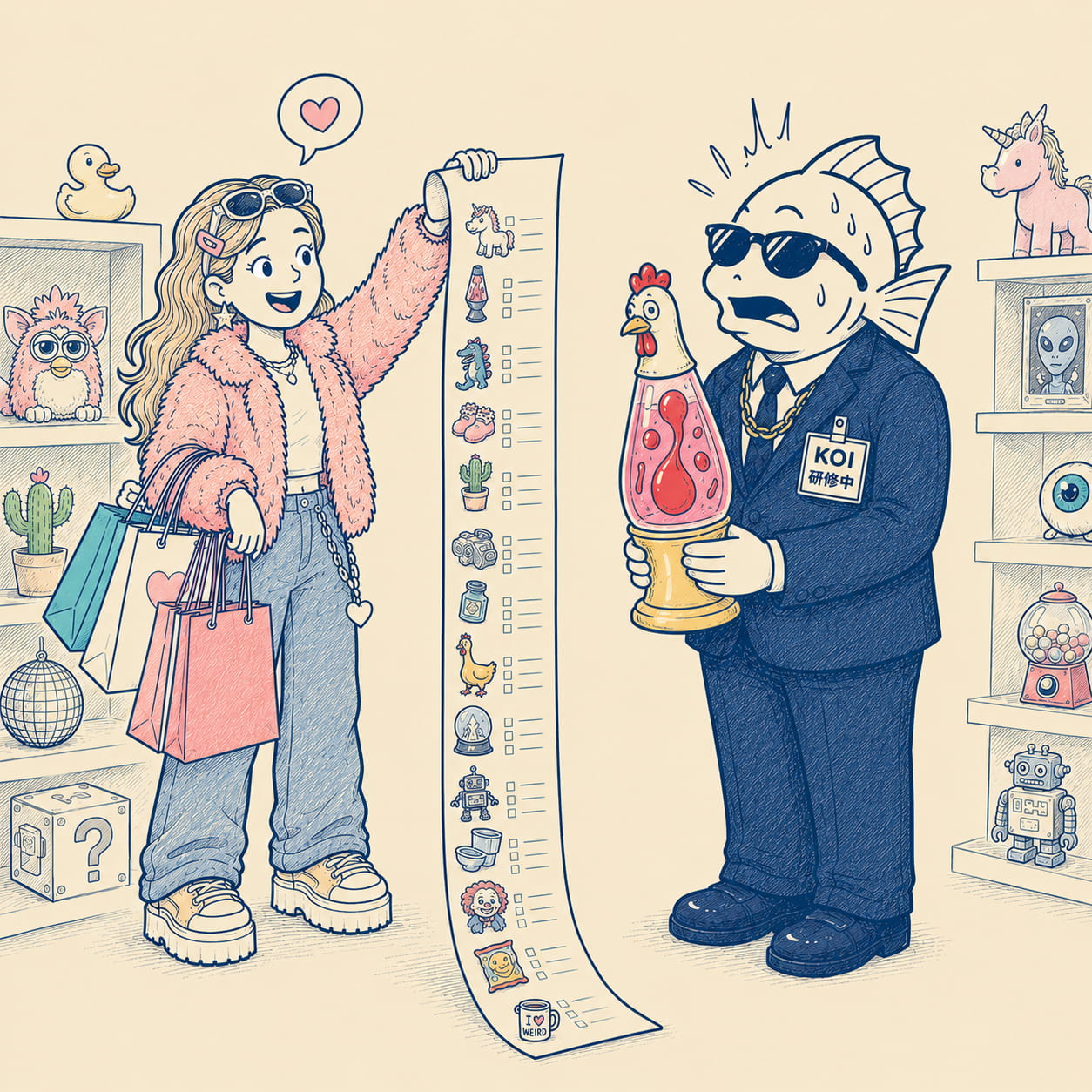
Why do people keep giving weird, unwanted gifts? Here’s why it happens, and how to make yourself easier to shop for so people give you something you’ll love.
Somewhere right now, someone is unwrapping a scented candle shaped like a pinecone, saying "oh, I love it," and silently calculating how many more Christmases until it is socially acceptable to throw it away.
They are not alone. Two reports on unwanted holiday gifts, quoted directly:
"More than half of US adults — a whopping 53% or 140 million people — will be left disappointed by at least one present they unwrap in December, website Finder predicted based on previous years’ surveys." (Source) That is a lot of disappointment, returns and guilt. And it gets worse. "Thirty-five percent of those who received a holiday gift tell CivicScience they’ve made a return or exchange, or plan to do so soon, equalling the percentage who did the same after the 2023 holiday, but marking an eight percentage point jump from those who did returns/exchanges following the 2024 holiday season." (Source)
It is rarely a lack of love and usually a lack of information. The pinecone candle wasn't malicious. The giver just didn't know, and that is a fixable problem if you're willing to make yourself a little easier to shop for.
Most gift-givers work from scraps. You mentioned coffee once, two years ago, so now you're the "coffee person" forever. You wore a black jacket to one dinner, so that's apparently your whole aesthetic. The guess is built on a fragment of you, stretched into a whole personality.
Give someone three weeks to shop for you and they'll think it through. Give them until 6 p.m. on the 23rd and they'll grab whatever is left on the shelf that seems vaguely in your direction. That is how you end up with your fourth identical mug. Nobody thinks you need mugs. Mugs are just always available.
This is the sneakiest one. Your uncle buys you the gadget he thinks is brilliant. Your coworker picks the candle scent she loves. Imagining your own taste is easier than reconstructing someone else's from memory. The gift ends up saying a lot about the giver and not much about you.
Without somewhere central to check, people can't tell what you already have, what you've outgrown, or what you'd pick for yourself. So they duplicate, they guess, and they buy the wrong brand of the one thing you are oddly specific about.
It is closet space taken up by things you'll never use, time spent in a return line, and a small flicker of guilt every time you think about donating something a person you love gave you. In the most recent survey above, return intent is up eight percentage points from the year before.
You don't need to hand people a laminated instruction manual. You just need to give them something better than a guess.
Build a real wishlist, not a wish-vibe. A good one has real items across different price points, with links, sizes, colors, and notes, pulled from wherever you shop rather than one retailer's corner of the internet. It keeps the surprise and removes the part where you end up with something you'll never touch.
Let people reserve items privately. When someone claims a gift, other shoppers can see it is taken, but you can't see who took it. The surprise stays intact and nobody buys the same thing twice. Some wishlist apps, Bestboy among them, work this way.
Put your sizes somewhere people can find them. Tops, bottoms, shoes, preferred fit, the brands that work on your body. This one detail removes an entire category of weird gifts: the clothing that fits nobody.
Talk about your real hobbies, not your aspirational ones. The sport you play, the show you're rewatching for the fourth time, the niche skill you're two YouTube tutorials into. A gift tied to something real beats one aimed at "someone your age."
Mention brands you trust. Not because you're precious about it, but because "a candle" and "a candle from the one brand that doesn't give you a headache" are two very different gifts.
Remind people your birthday exists. Not everyone has a great internal calendar. A gentle nudge a few weeks out beats a panicked last-minute purchase every time.
Suggest experiences, not just objects. Tickets, a class, a subscription you'll renew, a donation to something you care about. Not everything needs shelf space to count as thoughtful.
Set a boundary, kindly, if you have one. "I'm trying to keep things simple this year, and an experience or something consumable would mean a lot" is polite and clear, and clarity is a gift to the giver too.
The best fix for weird gifts is letting people see more of your life.
Mention what you're cooking lately. Post the photo of your new bookshelf. Say out loud that you're saving for something specific, learning something new, or completely over the thing you used to be obsessed with. None of this needs to be an announcement. It is the ordinary texture of being a person, and it is exactly the material good gift-givers work from.
If you want to make it easy, add a short "about me" note to your wishlist: your style, your sizes, your no-go list (no scented candles, ever), and anything coming up that is worth knowing about. Context turns a list of objects into a list that sounds like you.
And tell people they're allowed to just ask. "I'd rather you ask than guess" removes more pressure than any list ever could.
It will happen. Someone won't check the list. Someone will decide they know better. Someone will, against all odds, still buy the pinecone candle.
When it does, say thank you like you mean it, because the effort was real even if the execution wasn't. Don't make a face at the table. Decide later, privately, whether to keep it, return it, regift it, or let it go. If it is a pattern worth addressing, do it gently and later: "I loved that you thought of me. Next time, something like X would be perfect" gets the point across without stepping on the moment.
The relationship was always the real gift. The candle is just a bonus round.
A gift that fits your life says something bigger than "here's an object." It says I was paying attention. That feeling comes from accuracy, whatever the price. A five-dollar gift that is exactly right beats a hundred-dollar gift that is a beautifully wrapped guess.
Making yourself easier to shop for is a way of sharing information, the same instinct that makes restaurant reservations, packing lists, and calendar invites useful. It turns gift-giving from a guessing game back into what it was meant to be: a small, specific way of saying I see you.
Make it easy for people to get it right.