 By Penny Pickles ·
 By Penny Pickles ·
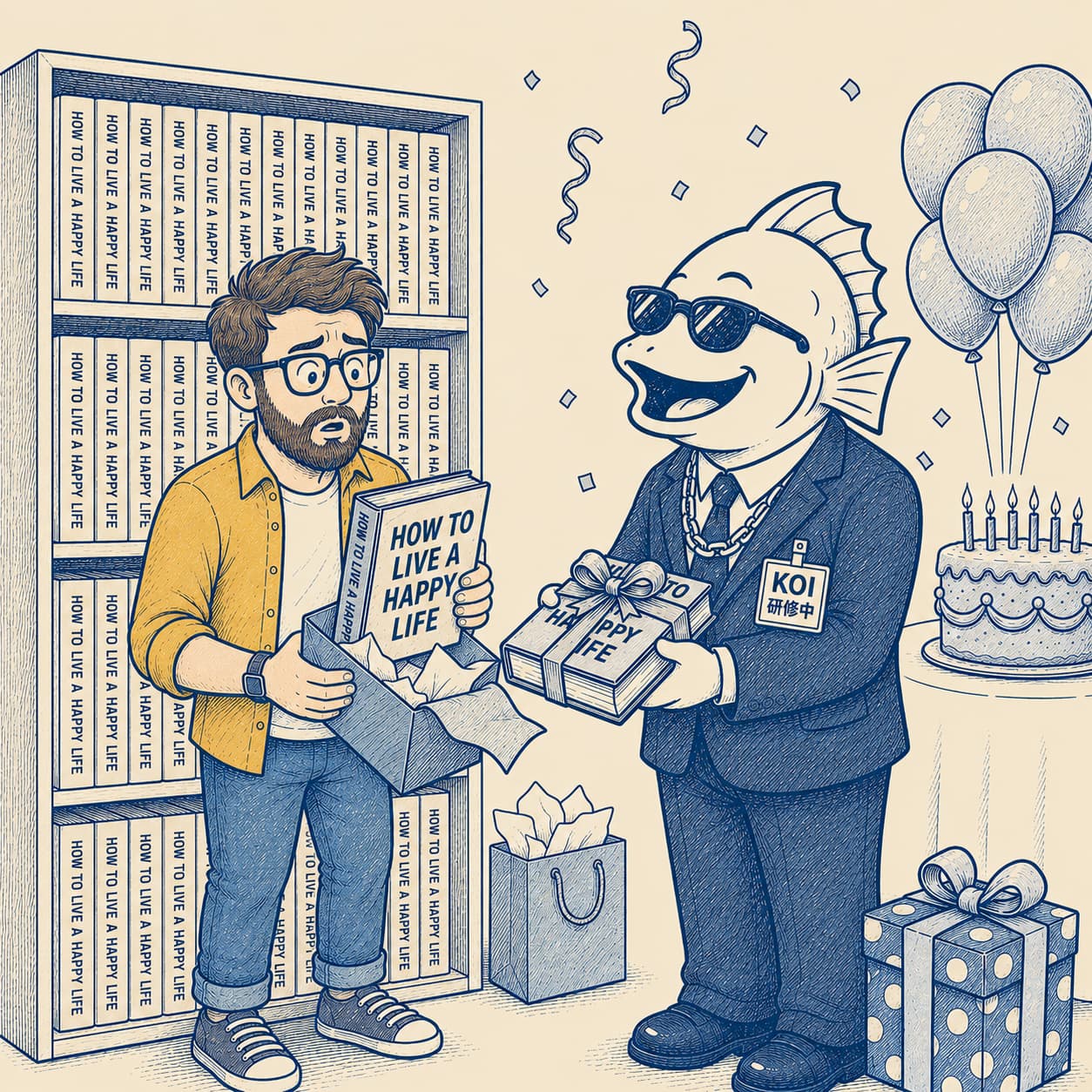
Tired of duplicate gifts? Here's why they happen, and how a shared wishlist with private reservations stops them for good, without spoiling surprises.
Nobody enjoys opening a gift and hearing someone else say:
"Wait. I got you the same thing."
It's an awkward moment for the recipient and an even worse one for the two gift-givers, who suddenly have to have a whole conversation about it in front of everyone, holding identical boxes, doing the math on who gets to keep theirs.
It happens constantly. Two relatives buy the same birthday present. Couples accidentally double up on a coffee machine. Friends organize a group gift, only to discover another friend organized the same group gift. Family members shop for the kids without comparing notes. Someone buys a gift early, mentions it to one person, forgets to mention it to five others, and, well, you know how this ends.
Watch enough gift exchanges and the pattern is clear: it's almost never that people are bad at giving gifts. It's that most families and friend groups don't have an actual system for coordinating who's buying what.
Here's why duplicate gifts happen, and how a shared wishlist with private reservations solves it for good, without ruining a single surprise.
Duplicates aren't random bad luck. They follow a pretty predictable pattern.
When people aren't sure what to buy, they default to the "safe" list: a kitchen gadget, a cozy blanket, a nice book, a candle, whatever toy is popular this year. When five people are all reaching for the same three ideas, a collision is close to guaranteed.
Without a shared list, everyone's shopping in their own little bubble. You text one cousin but not the other. You check with your sister and forget your brother exists (sorry, brothers everywhere). You assume someone else is handling the big-ticket item, while they're assuming the exact same thing about you.
The result: two people, each fully convinced they're the only one buying the thing.
A family group chat is great for sharing photos and re-litigating which weekend works for the holidays. It is terrible at tracking who's buying what. Messages get buried. Someone says "I'm thinking of getting the board game" and never confirms whether they pulled the trigger. Three days later, someone else scrolls past that message, assumes it's still fair game, and buys it anyway.
A lot of people default to one retailer's built-in wishlist because it's easy. The problem is that nobody's actual wants fit inside one shop. You want a book from here, a kitchen thing from there, a toy from somewhere else, and an experience gift that isn't sold online at all. Spread across five different lists, nobody sees the whole picture, which is exactly when duplicates slip through.
Two relatives, one birthday gift. Your aunt and your cousin both adore you. Both land on the same "perfect" item independently. Neither finds out until the wrapping paper's already off.
Group gifts, doubled. One friend starts a collection for a nice watch. Another friend, with zero idea the first collection exists, starts one for a nice speaker. Both succeed. The recipient now has two big gifts they didn't ask for, and two organizers who feel a little deflated.
Kids, especially. Grandparents, aunts, uncles, family friends. Everyone wants to bring something fun, and without one shared list, three of them land on the exact same toy.
The early-buyer problem. Someone buys a gift early, mentions it to one or two people, and forgets everyone else. Someone else buys the same thing later, assuming it was still up for grabs.
None of these are about bad gift-giving. They're a communication gap, and communication gaps have a fix.
A public wishlist is just a list of things you want. It's useful, but on its own, it does nothing to stop two people from buying the same item off it.
A coordinated gift list adds one crucial layer: private reservations.
With reservations in play:
That's the whole difference. A public wishlist tells people what you want. A coordinated one tells people what you want and what's already covered, which is the part that prevents duplicates.
For Bestboy, preventing duplicate gifts is a core feature, not an add-on.
When someone reserves a wish on your list:
Share one link with your entire family or friend group, and Bestboy handles the coordinating that used to happen (badly) in group chats.
You can read the full breakdown here: How reserving a gift works.
Here's a fair question: if you can make different lists for different people, say, one for family and a completely different one for friends, doesn't that just recreate the "five different links" problem you warned about earlier?
It doesn't, and here's why. A single wish can live on more than one of your lists at the same time. Add the same coffee machine to both your family list and your friends list, and Bestboy treats it as one item behind the scenes, not two. The moment anyone reserves it, on either list, it is marked as taken and hide it everywhere else it appears, on every list, for every visitor. Your family never has to see your friends' list, and your friends never have to see your family's, but the coffee machine still only gets bought once.
That's the part that makes splitting your audience safe: privacy for you, zero blind spots for duplicates.
Because everything syncs live, you're never in the awkward spot where someone reserves an item minutes after you did. If two people try to grab the same gift at once, Bestboy shows which reservation landed first. No more "wait, I thought I called it."
Remember the scenario where two friends each start a separate fundraiser for the same big gift, with no idea the other exists? For bigger items, a honeymoon, a stroller, a new laptop, you can turn a wish into a single donation goal instead of leaving group gifting to scattered side chats and cash apps. Add your bank details to the wish, decide whether contributors chip in a fixed amount or whatever they're comfortable with, and Bestboy shows one progress bar climbing toward the goal as people mark that they've sent their share. Because it lives on one wish, everyone can see it's already in motion, which is exactly what stops a second, redundant collection from starting.
One thing worth being precise about: Bestboy never processes, holds, or moves any money. It displays your payment details on the wish and lets contributors mark that they've sent their portion directly to you, bank to bank. The transaction always happens entirely outside of Bestboy.
A lot of duplicate gifts happen because someone's working from an outdated version of your list. They bookmarked it in October and never checked back before December. A few things fix that:
Duplicates often happen because gift-givers default to the same three "safe" ideas, a candle, a mug, a gadget, because that's all they have to go on. Customize each list to shrink that risk: set a custom order so it's obvious what you want most, choose whether to display prices, and add a playful banner that reveals a bit more about you, birthday, hobbies, favorite brands, clothing sizes, so people can shop confidently outside the list too, instead of falling back on a generic guess.
If distance is the real issue rather than indecision, you can also show your mailing address on a shared list, so someone who'd love to hand a gift over in person, but can't, knows exactly where to send it instead.
Duplicates aren't only caused by people who never reserved anything, sometimes it's someone who reserved a gift, fully intended to buy it, and then just... forgot, right up until someone else bought it instead. For anyone with a Bestboy account, a reservation gets saved directly to their account, so the item does not depend on anyone's memory. They are reminded what they claimed and nudged to buy it before the occasion arrives, closing the one gap even a good reservation system can leave open.
Beyond the list itself, two small habits make it even more bulletproof:
Add more items than you have gift-givers. Ten people shopping off a six-item list means four of them are guessing, and guessing is where duplicates live. Give people room, across a range of prices.
Reserve first, buy second. The system only works if people claim an item before purchasing it. "See it, love it, buy it, then remember to mark it" leaves a gap where someone else can slip in.
Even a good system isn't bulletproof. Someone forgets to reserve. Someone buys in a physical store and skips the app entirely. Someone just doesn't see the list.
If it happens:
The gesture matters more than the object. Always has.
Duplicate gifts were never really a generosity problem. They're a coordination problem.
Everyone wants to give you something you'll love. They just don't always know what's already covered, and how would they, without a shared source of truth? Group chats bury the answer. Spreadsheets need constant upkeep. A single-store list never covers everything you want.
Bestboy builds duplicate prevention into its core instead of bolting it on as an afterthought: one place for every idea, real-time visibility for gift-givers, and the surprise staying fully protected for you. Build a list, share one link, and the reservations are handled in the background. A wish can live on more than one list, including a private one, and if it's already reserved anywhere, you'll know before you accidentally buy it twice.
The most reliable fix is a shared wishlist where people reserve an item before buying it, so every gift-giver can see at a glance what's already spoken for. Combine that with a habit of listing more ideas than you have shoppers, and duplicates become the exception rather than the norm.
Mostly because people shop without visibility into what others are buying. Everyone gravitates toward the same "safe" ideas, and group chats aren't built to track who's claimed what. Thoughtfulness is rarely the problem. Usually there is no shared reference point.
It's a feature on a shared wishlist that lets a gift-giver "claim" an item once they've decided to buy it, marking it as taken for everyone else without alerting the recipient. It's the piece that turns a simple wish list into an actual coordination tool.
It's possible if the list doesn't have reservations, or if someone buys without marking the item first. With a reservation system and real-time syncing, the risk drops sharply, since the second buyer sees the item is already taken before they check out.
Get everyone shopping off one shared list instead of individual guesses, and appoint one person (a parent, usually) to keep half an eye on it before big occasions. This is one of the most common duplicate scenarios, because so many people want to buy for the same kid.
No, as long as it uses private reservations. Gift-givers can see what's already claimed, but the recipient can't see who claimed what or when, so the "what" stays a mystery even though the "duplicate risk" is gone.
Less duplicate stress. Fewer awkward returns. More time enjoying the occasion instead of managing the aftermath.
Create your free Bestboy wishlist