 By Penny Pickles ·
 By Penny Pickles ·
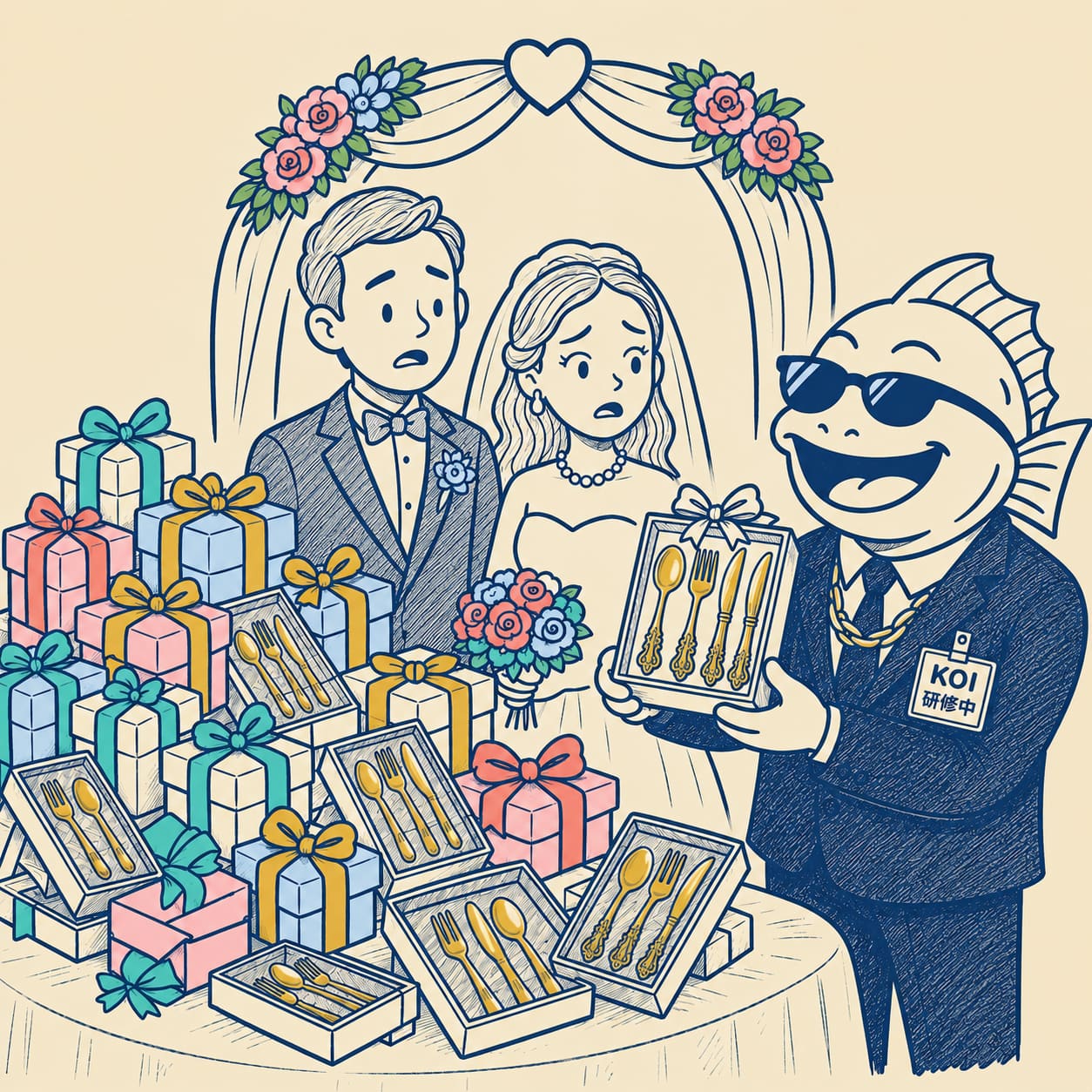
Wedding registries don’t have to be guesswork. Learn how a registry works, what to include, and how to build one that reflects your life together.
Wedding planning has a strange talent for turning tiny decisions into full-blown debates.
You spend forty-five minutes discussing napkin colors. Someone starts a spreadsheet for cake options. At some point, a champagne tower enters the conversation, even though neither of you has ever had an actual glass of champagne.
Then your mother-in-law asks: “So... have you made your wedding registry yet?”
Compared to seating charts and family group chats, a registry should feel refreshingly simple. It’s just a list that says: “If you’re thinking about getting us a gift, here’s what we’d love.” That’s it.
But somehow, lots of couples skip or forget sharing their wishlist and then end up with a crystal bowl that’s too fancy for cereal but somehow too small for salad. A juicer with enough attachments to build a small robot. A garden gnome statue, even though they don’t have a garden, a balcony, nor the mood to hang out with gnomes.
A wedding registry should fill your home with things you’ll use, enjoy, or laugh about years from now.
A wedding registry is a list of gifts a couple creates before their wedding. Friends and family can browse it when choosing a wedding gift, which makes life easier for everyone involved. (Source: Wikipedia, Wedding registry)
Traditionally (read: in the past), wedding registries focused on setting up a first home. Think dinner plates, glassware, towels, bed sheets, cookware, and other kitchen essentials.
Today, couples build registries around their actual lives. Especially, if they’ve lived together for a while, they’ve often bought most of the essentials themselves.
So instead of adding another set of pots and pans to the cupboard, many couples now ask guests to contribute towards bigger-ticket items, such as their honeymoon or a kitchen renovation. Specialized versions such as the honeymoon registry now exist alongside the classic store list (Wikipedia).
And it doesn’t have to be anything extravagant. It could be a sofa that doesn’t lean suspiciously to one side, or the pizza oven you’ve both convinced yourselves is a perfectly sensible investment.
The basic idea is simple. You create a list of items, experiences, or funds you’d like to receive as gifts. Then you share that list with your wedding guests, usually through your wedding website or invitation details.
Guests choose something from the registry based on their budget and preferences.
In many modern registries, each gift can be reserved, so two people don’t accidentally buy the same thing. That part is what makes registries so useful: they reduce duplicate gifts, remove guesswork, and help everyone feel more confident about what to give.
Some registries are store-based, which means guests buy from a specific retailer. Others are universal, which lets you pull items from multiple shops into one list. Many modern registries also include cash funds, honeymoon contributions, or experience gifts alongside physical items.
In practice, a good registry works like a shared wishlist with structure. The couple gets things they want, and guests get a clear, stress-free way to give a meaningful gift.
Because guessing gifts is surprisingly difficult. Your guests want to get you something meaningful. Really. Nobody wakes up thinking, “Today I will intentionally buy the weirdest thing this couple has ever owned.”
But when couples skip a wedding registry and say, “We’ll be happy with anything” or “Just surprise us,” guests usually take that as permission to improvise. That’s often when the surprises get weird.
One person picks a funky bathroom rug that seemed hilarious in the shop. Another chooses a decorative bed sheets that matches neither your taste nor your furniture. Someone else buys an air fryer you will never use but will feel guilty not keeping, because it was “so thoughtful.” And guess what, more people had that idea and got you… wait for it… also an air fryer.
It’s not that people mean badly. They usually mean very well. But without a proper wish list, they’re guessing, and guessing tends to produce gifts that are thoughtful in theory but awkward in real life.
That can be especially frustrating when you’re starting a new married life and already dealing with expensive basics like rent, furniture, kitchen setup, and everything else that comes with building a home together. A wedding registry helps people choose something you’ll use instead of hoping a surprise gift turns out to be useful.
A registry also saves everyone from opening gifts and discovering you’ve somehow received four identical air fryers or rice cookers. Which is generous. But difficult to plug in all at once.
A good time to start is several months before the wedding. That gives you time to think through what you need, compare options, and share the registry before showers, engagement parties, or early gift buying begins.
If you wait too long, guests may already go ahead and buy you something they find cool, but you won’t ever use.
If you start early, the registry becomes useful much sooner and feels less like a last-minute task.
It also helps to update the list as you go. You might realize you need more affordable items, or that your first draft is full of things you’d admire more than use. That’s normal.
Start with your real life. Just look around your home. What do you use every day? What keeps ending up in your online shopping basket before you close the tab? What’s been on your “we should really buy that” list since last year?
Maybe it’s better kitchen knives. Maybe it’s new luggage for trips you’ve been planning forever. Maybe it’s replacing the frying pan that’s become mostly non-stick because most of the coating has already left.
Your registry should look like your life. Not a showroom.
Not every guest is in the same position, and that’s completely normal. Some people want to buy something small. Others might join together for a larger gift. Giving people different price options makes choosing easier.
A strong wedding registry usually has a mix of lower, mid, and higher-priced items. That way, guests can choose something that fits their budget without feeling awkward. Small gifts matter too. A favorite cookbook, a cozy blanket, or espresso cups you’ll use every morning can be just as meaningful as a bigger appliance.
Your registry doesn’t have to stop at the wedding day. Maybe you’re saving for a honeymoon. Maybe you’re furnishing your first home together. Maybe you’ve both been talking about learning pottery for two years without ever booking the class.
Those future plans belong here too. A good registry reflects the life you’re building, not just the party you’re planning.
People appreciate clear direction.
Nobody wants to become an amateur detective because your wedding registry consists of one vague Pinterest board and a comment that says, “Honestly, we’re happy with anything.”
That sentence sounds lovely. It also causes at least three relatives to panic-buy scented candles. A clear registry lets guests spend less time guessing and more time choosing something they’ll feel excited to give.
The best registries usually mix useful things with a few fun ones. Practical gifts help set up your home. Personal gifts make the registry feel like yours, not just a checklist of chores.
That could mean kitchen basics alongside a record player, a framed print from a place you love, or a shared experience you’ll both remember. The point is not perfection. The point is to make the registry feel like a real snapshot of your life together.
A wedding registry can include almost anything that fits your life, but common categories include:
You do not need to include every category. The best registry is the one that reflects how you live.
A wedding registry should make life easier, not feel pushy. That means keeping it helpful, clear, and easy to access without making gifts seem like an obligation.
It’s usually best to share registry details indirectly, such as through your wedding website or with guests who ask. The tone should be “here’s what would be useful,” not “please buy these exact things.”
It also helps to avoid filling the registry with only expensive items. A mix of price points makes the list more inclusive and practical. If you include cash funds or experiences, make them specific and meaningful so guests understand what they’re contributing to.
One common mistake is registering for too many things you’ll never use.
Another is making the list too narrow, which leaves guests with no good options at different budgets.
Some couples also forget to update the registry after things sell out or get purchased. That can create confusion later. Others fill it with items that sound aspirational but don’t fit their home, routines, or actual taste.
The goal is to make your life easier after the wedding, not to impress people.
A traditional wedding registry usually focused on home essentials: dinnerware, cookware, linens, and items for setting up a new household.
A modern wedding registry is more flexible. It can still include those basics, but it may also include cash funds, honeymoon contributions, experience gifts, or items from multiple stores.
That flexibility is a big reason modern wedding registries work so well. Couples can make a registry that fits the way they live instead of pretending they all need identical silver serving platters and twelve matching soup spoons.
Imagine a couple who loves cooking, traveling, and spending time outdoors. Their registry might include:
That registry feels balanced because it covers everyday life, shared hobbies, and future plans. It also gives guests a range of choices.
Your wedding registry is really about paying attention.
A thoughtful gift sticks because someone looked at it and thought: “Yep. That’s them.”
That’s the feeling a good registry creates. It helps the people who love you give something that fits your life instead of taking a wild guess in aisle seven.
Your guests feel more confident. You end up with gifts you’ll use.
And the weird surprise gifts? Those become a lot less likely once you give people a real registry instead of a polite invitation to improvise.
A wedding registry is a list of gifts, funds, or experiences a couple puts together before their wedding so guests know exactly what would be useful or wanted. It replaces guessing with a clear, shareable list, no crystal bowls that are too fancy for cereal required.
Yes, and it's increasingly common, especially for couples who've already set up a home together. The key is being specific: "honeymoon fund" or "pottery class for two" gives guests something concrete to contribute to, rather than a vague ask that feels less personal.
Several months before the wedding is ideal: early enough to beat engagement parties, showers, and early gift-buyers, but with room to adjust the list as your plans (and taste) evolve. Starting late usually means guests have already improvised something on their own.
There’s no fixed number, but a well-rounded registry usually includes a decent price range: enough lower-cost items that any guest can find something without overspending, plus a few bigger-ticket options for people who want to go in together on something larger.
Not on its own: the issue is a registry made up of only expensive items, which leaves guests with limited or awkward options. Mixing price points, including smaller everyday items alongside bigger ones, keeps the list practical and inclusive for everyone invited.
Share it indirectly, through your wedding website (like Bestboy), or when guests ask directly, rather than stating it outright on the invitation itself. The framing matters too: "here's what would be useful" reads very differently from "please buy these exact things."
Create your wedding registry today, and let your guests skip the guessing game.